
难兄难弟
奇異誓「奏」響凱歌_我的网站

一 | 週四清早,WNBA常規賽,奇異屆時主場迎戰節奏。
Ecological restoration
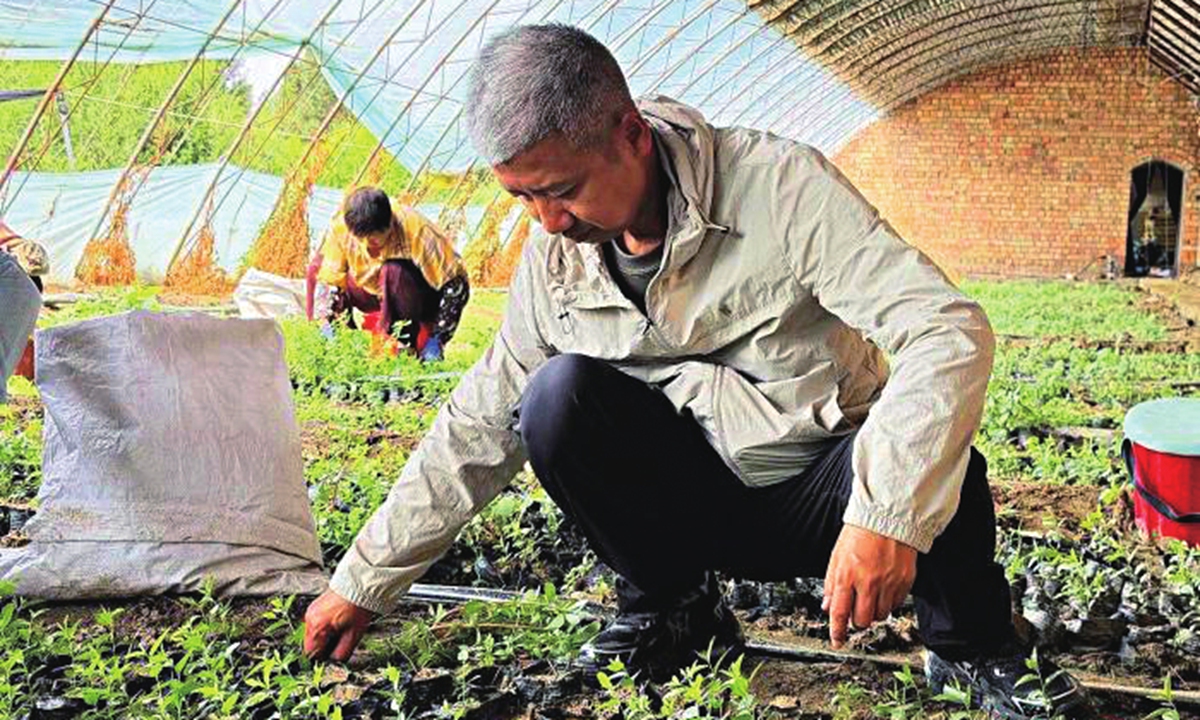
For over 30 years, Wensuyalatu, a member of the leadership group of the Urad Rear Banner forestry and grassland bureau, has made the Gobi Desert his workplace, dedicating his life to combating desertification, advancing ecological restoration through technological innovation, and helping local herders increase their incomes, according to the local bureau's official WeChat account.
Located on the edge of the desert in Bayannur's Urad Rear Banner, it is a key area in China's Three-North Shelterbelt Forest Program, a major ecological project aimed at strengthening the country's northern ecological security barrier.
However, early afforestation efforts in the desert were far from easy at the start.
The project covers 103,800 mu (about 6,920 hectares), including comprehensive treatment of 24,500 mu of desertified land, ecological restoration of 4,100 mu of non-desertified land, and 75,200 mu of enclosed grassland restoration. The project also includes the construction of 11 small-scale water conservation facilities, all of which required strict standards and extensive coordination.
The project also includes the construction of 11 small-scale water conservation facilities, all of which required strict standards and extensive coordination.
In 1991, Wensuyalatu, then in his early 20s, chose to devote himself to forestry and grassland conservation in the Urad Rear Banner. Since then, he has remained on the front lines of desertification control, witnessing the region's harshest environmental challenges and working to find solutions adapted to the fragile desert ecosystem.
In the early years, afforestation in the Gobi Desert was an extremely difficult task. The most critical planting season in spring often coincided with the strongest sandstorms of the year. Every year during the key afforestation period, Wensuyalatu would stay deep in the desert, guiding workers on planting techniques and management practices, while carefully overseeing every detail of the ecological restoration projects.
"Every spring, the wind and blown sand were so strong that it was hard to keep your eyes open. The sand hit your face like needles. During the day, we followed workers to dig holes and plant trees, and at night we stayed in temporary shelters to organize data and review the day's work. That was the normal routine for desertification fighters," Wensuyalatu recalled.
The road to restoring the desert was far from easy. Years of drought, low survival rates of seedlings, and skepticism from some local residents created major obstacles.
"At the beginning, it was really difficult. The climate was extremely dry, and many seedlings died after being planted. Some herders did not understand or support the work. They believed deserts were naturally barren and that no amount of effort could make trees grow there," Wensuyalatu said.
To change these perceptions, Wensuyalatu brought local residents to see firsthand the damage caused by desert expansion. Through visible results and long-term communication, he gradually won the understanding and support of the community.
Facing the ecological challenges of the Urad Rear Banner, Wensuyalatu began exploring new approaches beyond traditional restoration methods.
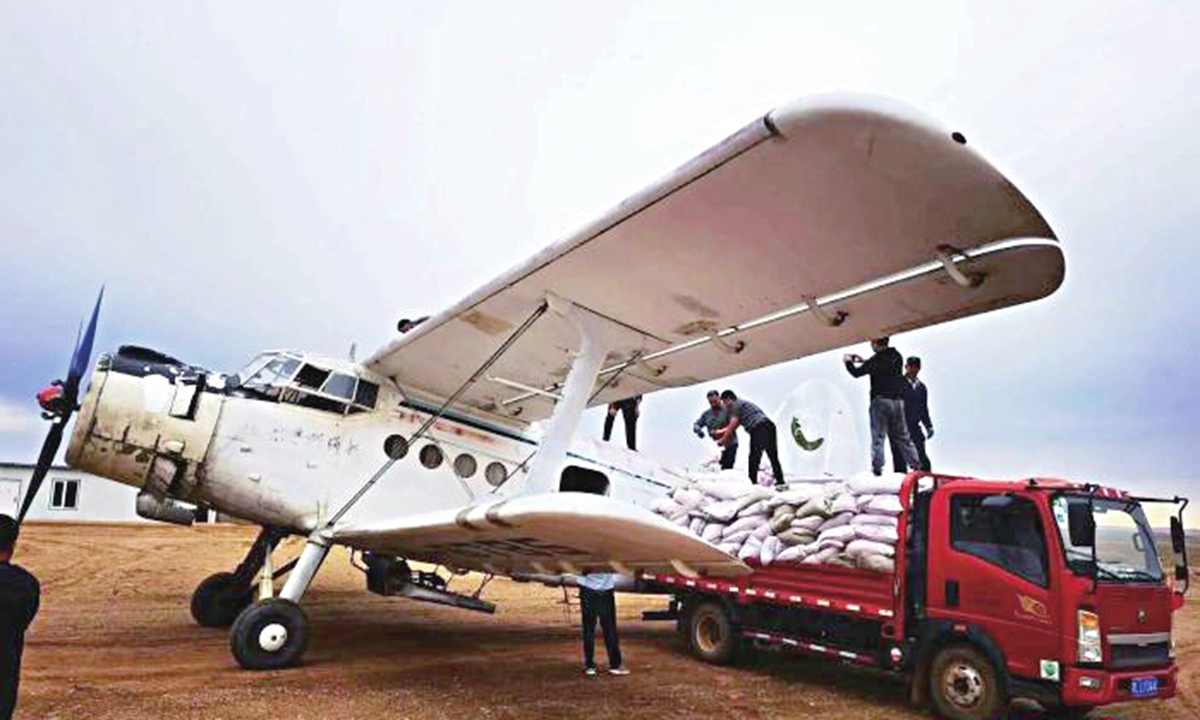
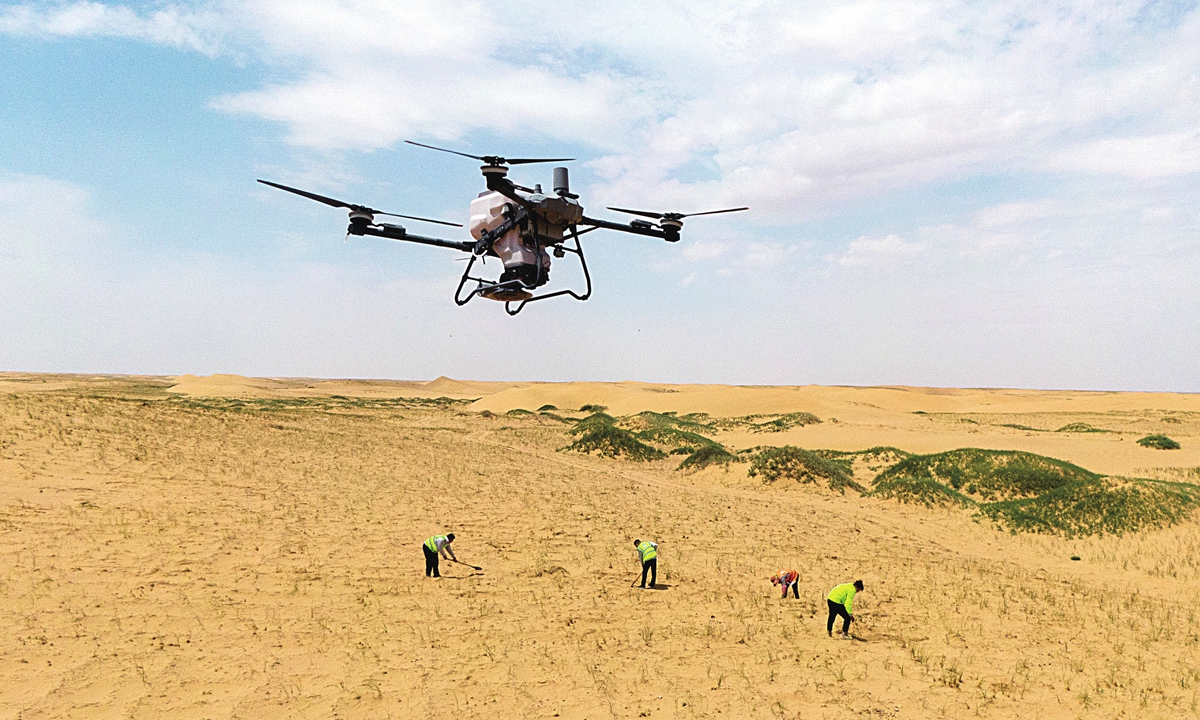
Since 2004, he has led efforts to tackle desert restoration challenges by introducing large-scale aerial seeding projects, creating a breakthrough approach for restoring degraded desert ecosystems in the region.
"Compared with traditional methods, aerial seeding is more efficient and can cover wider areas. Based on local climate and soil conditions, we select suitable desert plant seeds and precisely control the seeding height, density and timing to improve survival rates as much as possible and accelerate desert recovery," Wensuyalatu explained.
After years of effort, the aerial seeding projects under Wensuyalatu's leadership have restored more than 800,000 mu of desert land, with an effective restoration rate of 62.2 percent.
He also developed an integrated management approach combining "protection, management, retreat, restoration and publicity," establishing a mixed vegetation system of trees, shrubs and grass to curb desert expansion and reduce sandstorms at their source.
Beyond restoring greenery, Wensuyalatu has also focused on strengthening scientific research and protecting native desert species.
Starting in 2010, he devoted himself to the artificial cultivation of endangered native desert plants. After more than a decade of repeated experiments, he successfully developed cultivation techniques for rare species such as the endangered evergreen broadleaf shrub Ammopiptanthus mongolicus, Mongolian almond and drought-resistant elm.
Under his leadership, his team cultivated 6.5 million seedlings and completed more than 4,000 mu of high-quality afforestation projects, with seedling survival rates consistently exceeding 80 percent.
For Wensuyalatu, desert restoration is not only about creating ecological benefits, but also about improving people's livelihoods.
He has long promoted the idea that "trees should bring both ecological value and economic value." By leveraging local desert resources, he helped establish a 10,000-mu industrial base for desert plants and cistanche - a medicinal plant often grown in desert environments - across four key local villages, integrating ecological restoration with specialty desert industries.
"In the past, people thought desertification control was simply about planting trees - it took a lot of efforts but brought little income. Now things are different. By planting trees and developing industries such as cistanche cultivation, desert land can generate real wealth," a local herder said.
To ensure that local communities benefit from ecological development, Wensuyalatu introduced enterprises, supported family forest farms and professional cooperatives, and promoted large-scale, market-oriented operations.
The once barren desert has gradually become a "green treasure chest" for local herders, achieving a win-win outcome: greener landscapes, improved ecosystems, stronger businesses and higher incomes.
"Desertification control is not just an ecological project, but also a project that benefits people," Wensuyalatu said.
"Only when communities gain real benefits from protecting nature will they actively participate in ecological conservation. That is the key to making restoration efforts sustainable and achieving the vision that lucid waters and lush mountains are invaluable assets," Wensuyalatu said.
Global Times
。節奏已經連敗十一場,是當下聯盟連敗場次最多的球隊,何況今仗要作客,節奏只會繼續失利。
雖然奇異此前連續敗給王牌兩次,但她們上仗在得到21分的絲迪朗等人帶領下擊敗火花重返勝軌,目前以20勝14負的戰績位列聯盟第7位,進軍季後賽的希望頗大。

二 | 尤為亮眼的是奇異的主場戰鬥力,近期9個主場斬獲8勝1負,目前更是處於七連勝中。奇異在主場攻防兩端表現出色,前段時間還曾以20分大勝水星,此番繼續坐鎮主場,奇異贏波志在必得。
節奏目前以10勝24負位列聯盟第13位,近期狀態更是陷入萬劫不復的泥潭,苦吞十一連敗。節奏在防守端的漏洞極其嚴重,近期面對狂熱、夢想都讓對手得分破百,今季的客場戰績更是僅有4勝12負。攻防失衡且士氣全無的節奏,面對主場火力全開且正全力衝刺季後賽席位的奇異,必然沒有還手之力。陣容方面,妮娜莎巴莉與莎莉格連等人因各自原因缺陣。

三 |
Current article:http://fgj78h.xiongpeiduanlouduoennongleng.cyou/list_soj1/4oarbam.html
Published on:10:01:47